
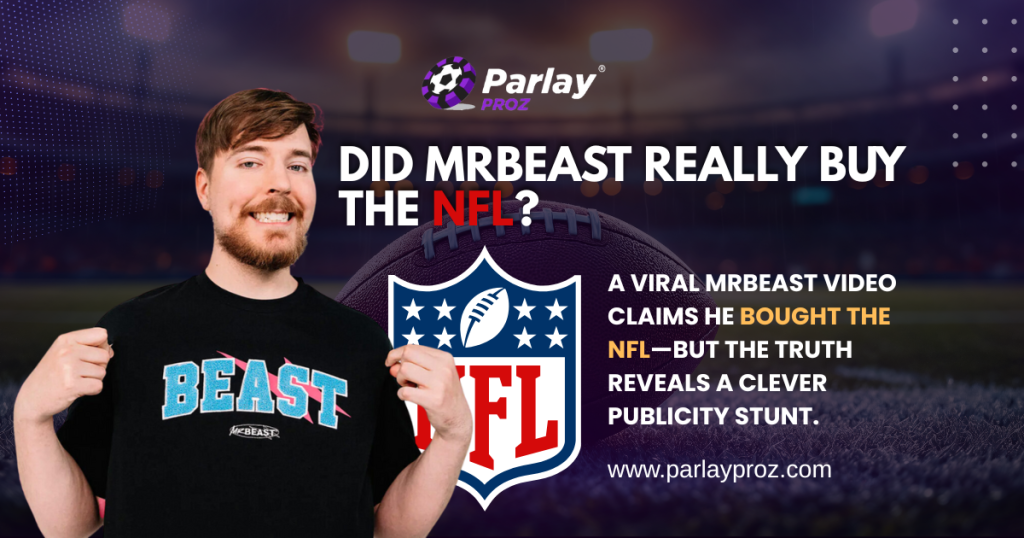
The internet erupted this week after YouTuber Jimmy Donaldson, better known as MrBeast, claimed in a viral video that he had “bought the NFL.” The clip, released just one day before the league’s new season, featured MrBeast standing alongside commissioner Roger Goodell in what appeared to be a high-profile press conference. Within hours, the video crossed 4 million views, sparking speculation across social media and even trending under “MrBeast NFL” on X (formerly Twitter).
The claim gained traction because of MrBeast’s reputation for headline-grabbing stunts, from giving away private islands to hosting million-dollar competitions. However, the NFL is not owned by a single individual, making such a purchase impossible. Instead, the video served as a promotional stunt tied to YouTube’s streaming deal for Friday’s Los Angeles Chargers vs. Kansas City Chiefs matchup in São Paulo, Brazil. This blog will break down how the rumor spread, the reality behind the announcement, and what it means for both the NFL and digital media.
The Origins of the Claim
The rumor began on Wednesday when MrBeast uploaded a video titled “I Bought the NFL” to his YouTube channel. In the clip, he appeared alongside commissioner Roger Goodell to announce sweeping changes to the league, including placing a YouTuber on each of the NFL’s 32 teams. The staged press conference looked authentic enough that casual viewers and headline-driven news accounts quickly framed it as a genuine business deal. Within just six hours, the video surpassed 3 million views, triggering a wave of speculation.
The claim spread even faster on X and TikTok, where short clips and memes detached from their original context went viral. Posts with captions like “MrBeast now owns the NFL” generated millions of impressions, while trending hashtags amplified the story further. Media aggregation sites contributed to the confusion by running sensational headlines, sometimes without clarifying in the opening lines that the announcement was promotional. This combination of viral video, rapid social sharing, and attention-driven reporting explains why the stunt was briefly mistaken for reality.
MrBeast’s Track Record With Extreme Stunts
MrBeast’s reputation for high-budget spectacles explains why many viewers briefly entertained the idea that he could buy the NFL. In 2021, he recreated the set of Squid Game with 456 contestants and awarded a prize of $456,000, a video that has since earned over 600 million views. He has also staged million-dollar giveaways, funded entire food banks, and launched large-scale businesses such as MrBeast Burger and Feastables, each promoted through elaborate challenges. These ventures showcase his ability to blend entertainment with massive financial outlays, making extraordinary claims appear plausible.
However, purchasing the NFL would be on an entirely different scale. While MrBeast is estimated to have a net worth of about $1 billion, the league’s combined team valuations exceed $150 billion, with the cheapest franchise alone valued at $4 billion. This gap underscores the difference between producing large-scale stunts for digital media and acquiring one of the world’s most lucrative sports leagues. The contrast highlights why the claim was never financially feasible, even for one of YouTube’s biggest creators.
The Reality Check: Can Someone Buy the NFL?
Despite the viral claim, the NFL cannot be bought as a single entity. The league is made up of 32 independently owned franchises, each with its own ownership group or individual majority owner. The Green Bay Packers are the only exception, operating as a publicly-owned, nonprofit corporation. Oversight of the league’s rules, scheduling, and operations falls to commissioner Roger Goodell, but he does not control ownership rights. This structure ensures that no single buyer, regardless of wealth, could acquire the NFL outright.
The scale of the league further underscores this reality. According to Bloomberg, the NFL’s annual revenue exceeds $20 billion, and its total franchise valuations surpass $150 billion. The most valuable team, the Dallas Cowboys, is estimated at over $9 billion alone. By contrast, even billionaires with personal fortunes larger than MrBeast’s estimated $1 billion would struggle to purchase just one team, let alone all 32. In short, the idea of an individual acquiring the NFL is financially and structurally impossible.
Why the Stunt Went Viral
The viral spread of MrBeast’s “I bought the NFL” stunt reflects a broader trend in internet culture, where outrageous or sensational claims are quickly shared before being verified. Social media users often react to eye-catching headlines and provocative visuals, generating immediate engagement. According to a study by Pew Research, over 60% of social media users admit to sharing content without confirming accuracy, particularly when it involves celebrities or high-profile brands.
MrBeast’s 431 million YouTube subscribers and large following across TikTok and X amplified the effect. Clips, memes, and reaction videos quickly circulated, reaching audiences who hadn’t seen the original announcement. Edits highlighting the supposed “purchase” were shared millions of times, creating a feedback loop that pushed the story far beyond the initial video. The stunt demonstrates how a single viral creator can shape narratives and temporarily blur the line between entertainment and reality.
Public Reaction and Media Coverage
The announcement generated a mix of serious speculation and comedic commentary across platforms. Some fans on X speculated about how MrBeast might manage team rosters, while influencers posted humorous takes imagining YouTubers playing in NFL games. A clip of the viral video was viewed over 2 million times on TikTok in just 24 hours, often accompanied by memes and exaggerated reactions.
Mainstream media outlets, including ESPN and BBC Sport, quickly clarified that the stunt was promotional and not an actual purchase. Articles emphasized that the NFL’s 32 teams remain independently owned, with no single individual in control. This contrast highlights the difference between viral social media amplification and verified reporting, showing how context can be lost in online trends but corrected through established news channels.
What This Stunt Reveals About Modern Media
MrBeast’s NFL stunt underscores how viral marketing can blur the line between entertainment and misinformation. A single well-produced video, amplified by millions of shares, briefly convinced sections of the public that one individual had purchased America’s most valuable sports league. The speed and scale of this spread highlight the challenges of today’s digital ecosystem, where content often circulates faster than fact-checks can keep pace.
The incident also reflects the growing influence of creator-driven media. With more subscribers than many traditional broadcasters have viewers, MrBeast demonstrates how digital personalities can rival or even surpass established outlets in shaping public perception. For audiences, it emphasizes the need for media literacy, the ability to question headlines, verify sources, and recognize stunts for what they are. In this sense, the story was not only about football but about the evolving relationship between online creators, marketing, and modern news consumption.
How Sports Fans Can Stay Ahead With Data
While MrBeast’s viral stunt was entertainment, it also highlights how deeply sports content shapes fan engagement. For those who not only watch but also participate in sports betting, having access to accurate player and team data can make all the difference. That’s where ParlayProz comes in.
ParlayProz provides detailed projections and statistics for major leagues such as the NFL, NBA, NHL, and WNBA, covering everything from individual player performance to team-wide trends. With features like hit-rate tracking, last-game averages, and streak analysis, users can make informed betting decisions rather than relying on guesswork. Even beginners can benefit, as ParlayProz also offers training sessions, webinars, and active community groups on WhatsApp and Discord. For anyone looking to approach sports betting with data-driven insight, ParlayProz serves as a reliable resource.
Summary
The viral claim that MrBeast had “bought the NFL” was never rooted in reality but in a carefully orchestrated stunt designed to spark attention online. The YouTuber’s collaboration with commissioner Roger Goodell appeared convincing enough to mislead casual viewers, but the NFL’s ownership structure makes such a purchase impossible. Instead, the announcement was tied to promotional efforts surrounding YouTube’s streaming deal for an NFL matchup. The incident illustrates how fast sensational content can spread across social platforms, how creator-driven media can rival traditional outlets in influence, and why media literacy is essential in distinguishing entertainment from fact.
FAQs
1. Did MrBeast actually buy the NFL?
No. The NFL is composed of 32 independently owned franchises, making it impossible for one individual to purchase the entire league. MrBeast’s video was a promotional stunt.
2. Why did people believe MrBeast bought the NFL?
The stunt looked authentic, featuring Roger Goodell in a staged press conference, and MrBeast is known for extreme, high-budget projects. This combination made the claim appear believable at first glance.
3. What was the real purpose of the video?
The video was a marketing collaboration tied to YouTube’s streaming deal for an NFL game between the Chargers and Chiefs in Brazil.
4. How much is the NFL worth compared to MrBeast’s net worth?
MrBeast’s net worth is estimated at around $1 billion, while the NFL’s total franchise value exceeds $150 billion, with individual teams valued in the billions.
5. Who owns the NFL if not one person?
Each of the 32 teams has its own ownership group or majority owner. The league itself operates as a collective association rather than a single entity.
6. Has MrBeast done similar stunts before?
Yes. He has staged large-scale events like recreating Squid Game, giving away private islands, and running massive competitions with million-dollar prizes.
7. How did the claim spread so quickly online?
Clips from the video were widely shared on X and TikTok, often stripped of context. Memes, reaction edits, and sensational headlines accelerated the viral reach.
8. What was the media’s role in clarifying the situation?
Outlets such as ESPN and BBC Sport quickly reported that the announcement was promotional, correcting misinformation and emphasizing the league’s ownership structure.
9. What does this stunt reveal about internet culture?
It highlights how fast sensational claims spread online, how audiences often share before verifying, and how creators can momentarily blur the line between fact and fiction.
10. What can audiences learn from this incident?
The key lesson is media literacy: checking sources, questioning headlines, and recognizing that viral entertainment often prioritizes attention over accuracy.